

You’re more connected than ever. So why does it feel like you’ve never been more alone?
I need to tell you something that might sting a little.
That group chat you check seventeen times a day? The Instagram stories you watch while eating dinner alone? The dating app matches you’ve been texting for three weeks without meeting?
They’re not helping you feel less lonely. They might actually be making it worse.
I know, I know. Stay with me here.
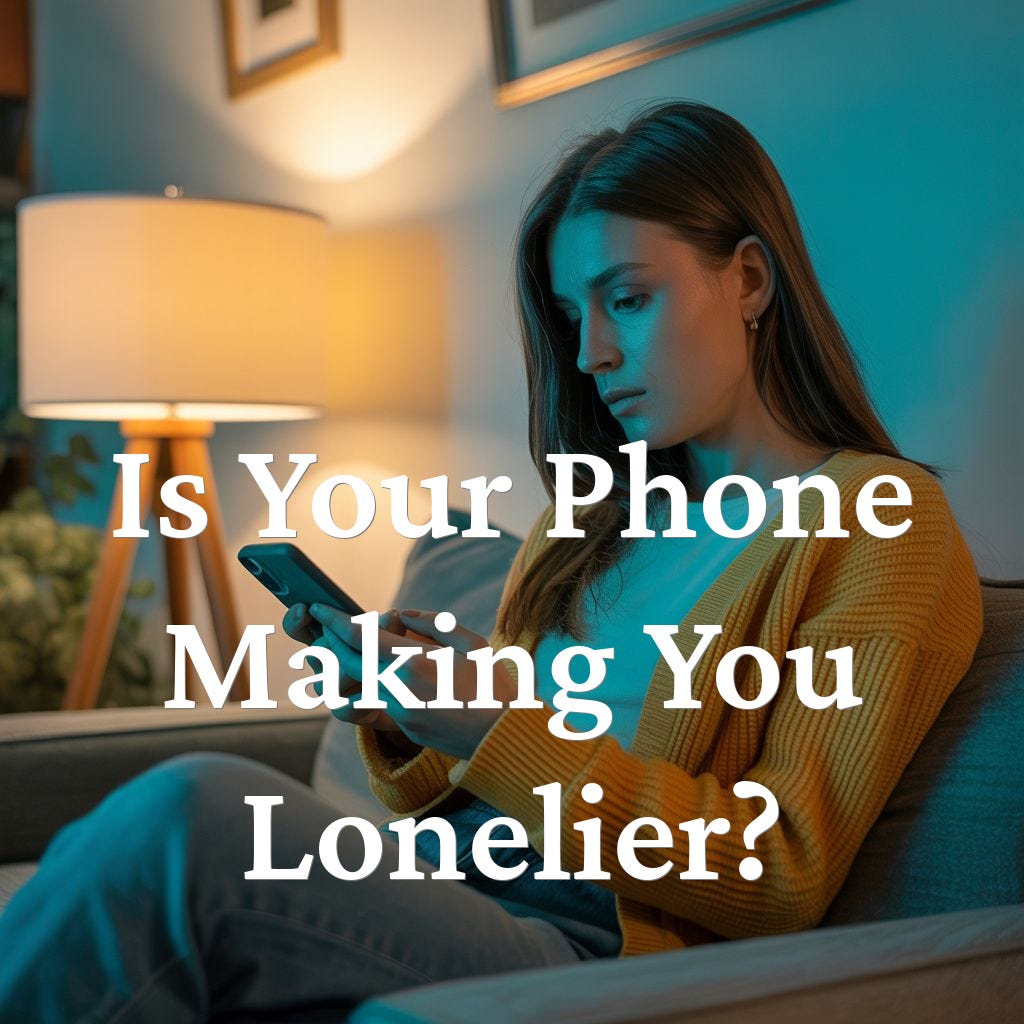
The Loneliest Generation
Here’s a stat that should terrify us: 61% of young adults report feeling “serious loneliness.” Gen Z—the most digitally connected generation in human history—is also the loneliest generation ever measured.
Read that again. The most connected generation is the loneliest.
Something has gone terribly wrong.
I see it in my coaching practice constantly. Smart, faithful, beautiful people who have hundreds of Instagram followers but no one to call when they’re crying at 2 AM. People with five dating app conversations going but no one to grab coffee with on Saturday. People who feel desperately, achingly alone in a world that promised connection was just a tap away.
The Substitution That Doesn’t Work
Here’s what happened: we substituted digital interaction for face-to-face connection, thinking they were basically the same thing.
They’re not.
When you text someone, your brain doesn’t release the same oxytocin as when you sit across from them and make eye contact. When you scroll through photos of friends at brunch, you don’t get the same nourishment as actually being at brunch. When you match with someone on an app, you haven’t actually met anyone—you’ve just seen their curated highlight reel.
The Catechism reminds us that we are “social beings” and that “love of neighbor is inseparable from love for God” (CCC 1878). We were made for relationship—real, embodied, face-to-face relationship.
But somewhere along the way, we accepted a counterfeit.
I recently worked with a woman—let’s call her Sarah—who spent three hours every evening scrolling social media. She told me it helped her “wind down” and “stay connected with friends.”
When I asked her when she’d last had dinner with a friend, she couldn’t remember. When I asked when she’d last had a real phone call—not a text, an actual conversation—she said it had been months.
Sarah had dozens of digital connections. But she was desperately, achingly lonely.
The Displacement Problem
Here’s the thing about time: we all have the same 24 hours. Every hour you spend scrolling is an hour you’re not spending in actual conversation. Every evening you spend watching Netflix alone is an evening you’re not spending at a young adult group or inviting someone over for dinner.
I’m not saying technology is evil. I’m saying it has a cost we don’t acknowledge.
That dating app conversation you’ve been having for two weeks? It’s eating time you could spend actually meeting people in person. Those Instagram stories you’re watching? They’re creating an illusion of connection that prevents you from pursuing the real thing.
We’ve let the easy substitute displace the harder—but infinitely more nourishing—original.
What Actually Works
So what do we do?
First, we have to be honest about what’s happening. That phone in your pocket is not neutral. It’s designed by some of the smartest engineers on the planet to capture your attention and keep you scrolling. You’re not weak for finding it hard to put down. You’re human.
Second, we have to choose the harder thing. Real connection requires showing up—physically, emotionally, vulnerably. It means going to that young adult event even when you’re tired. It means asking someone to coffee instead of just texting. It means putting the phone in another room when you’re with people.
Third, we have to rebuild the habits our grandparents didn’t have to think about. Weekly dinners with friends. Actual phone calls. Showing up to church early enough to actually talk to people. These things used to happen automatically. Now they require intention.
A Challenge
Here’s my homework for you this week: For three days, track how many hours you spend on your phone versus how many hours you spend in face-to-face conversation with people who aren’t family or coworkers.
Just notice. Don’t judge yourself. Just see the reality.
Then ask yourself: Is this the life I want? Is this the level of connection I was made for?
You were designed for more than likes and matches and message notifications. You were made for real, embodied, face-to-face love.
Your phone can’t give you that. But a real community can.
The question is: are you willing to put the screen down long enough to find it?
In Him,
Katie
Finding Adam Findinge Eve
Katie Palitto is a Catholic relationship coach and the creator of Game of Love. She helps faithful singles move from endless swiping to intentional relationships.