

“This year I’m going to find someone.”
It’s the most common New Year’s resolution among single Catholics. I hear it every January. I’ve said it myself.
And every January, I watch it fail.
Not because people don’t want love—of course they do. Not because they’re not trying—most are trying hard.
It fails because “finding someone” is the wrong goal.
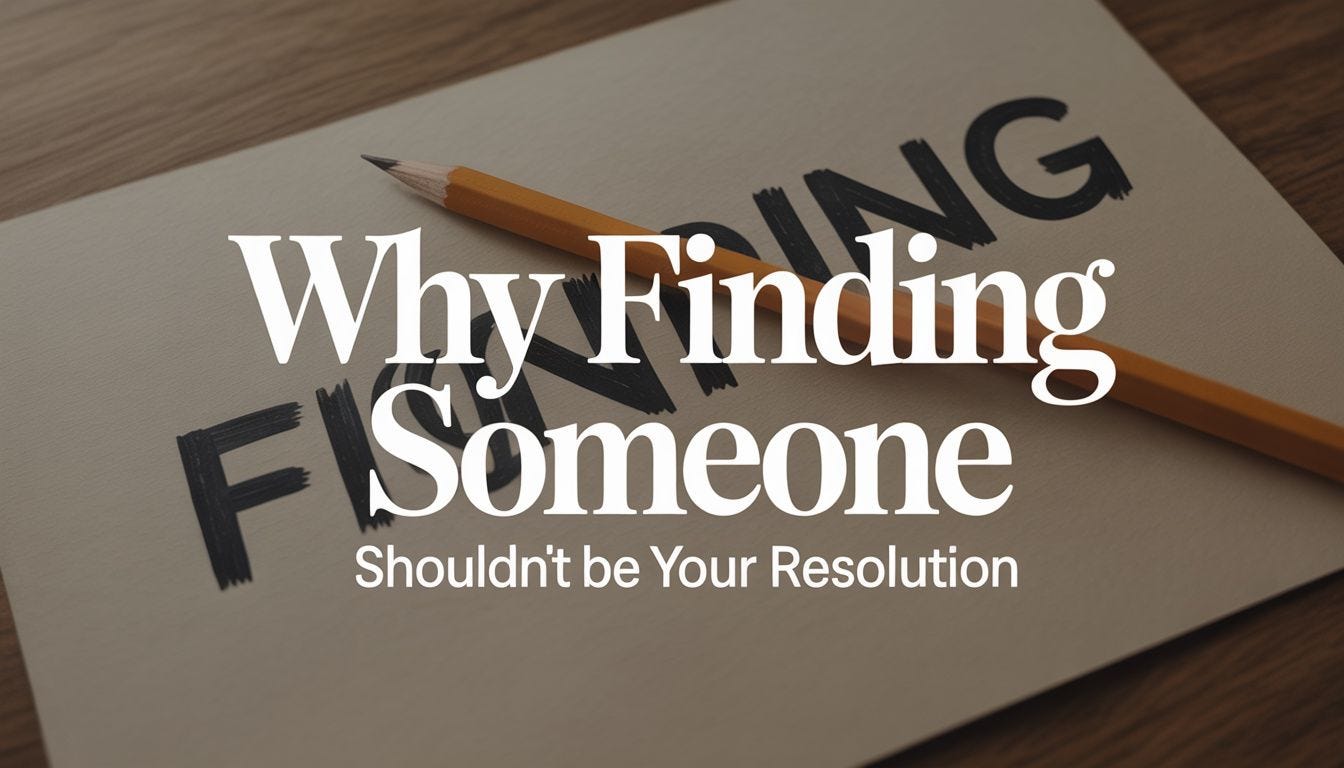
The Problem With “Finding Someone”
Let me tell you about three clients I worked with last year:
Sarah resolved to go on two dates per week. By March she was exhausted, cynical, and hadn’t met anyone she liked. She’d been so focused on the number that she’d forgotten to evaluate quality.
Marcus resolved to “say yes more.” He ended up in three relationships that he knew weren’t right, just because he was trying to be open. He wasted months—and broke hearts—by ignoring his own discernment.
Elena resolved to “be engaged by Christmas.” When October came with no ring in sight, she pushed her boyfriend so hard for commitment that he left. Her timeline had become more important than the actual relationship.
Each of them did exactly what they resolved to do. And each of them ended the year further from marriage than when they started.
What’s Wrong With Having Dating Goals?
Nothing—if they’re the right goals.
The problem isn’t intentionality. The problem is focusing on outcomes you can’t control while neglecting the formation you can.
You cannot control when the right person shows up. You cannot control whether someone chooses you. You cannot control timing.
You can control:
How you’re growing
What you’re healing
How you’re showing up
Whether you’re ready
See the difference?
The Catholic Vision of Dating
The Catechism teaches that marriage exists “by its nature ordered toward the good of the spouses” (CCC 1601).
Notice the word “good.” Not just the existence of spouses—the good of spouses.
This means dating isn’t just about finding a body to fill the role of husband or wife. It’s about finding someone who will help you become holy—and being someone who helps them become holy too.
That’s a radically different goal than “find someone.”
Better Goals for 2026
Here’s what I recommend instead:
Goal 1: Become More Self-Aware
“Know thyself” isn’t just Greek philosophy—it’s essential for discernment.
This year, resolve to understand:
Your attachment style and how it affects your relationships
Your communication patterns, especially in conflict
Your deal-breakers and desires
Your wounds and how they show up
The Theology of the Body teaches that “purity is not just temperance or abstention... it also opens the way to a more and more perfect discovery of the dignity of the human body.”
That discovery includes discovering yourself—body, soul, and patterns.
Specific resolution: “I will take an attachment assessment and work with a coach or therapist to understand my patterns.”
Goal 2: Build One Virtue Intentionally
Don’t try to become perfect. Try to grow in one area.
CCC 1648 tells us that couples “with God’s grace give this witness, often in very difficult conditions.” Witness-giving in difficult conditions requires virtue—not just feelings.
Pick one:
Patience (especially if you tend to rush)
Chastity (especially if you’ve struggled with boundaries)
Humility (especially if you tend to judge quickly)
Temperance (especially if emotions run your decisions)
Fortitude (especially if you give up too easily)
Specific resolution: “I will focus on building [one virtue] through daily practice and monthly accountability with a trusted friend.”
Goal 3: Heal One Wound
You don’t have to be completely healed to date. But you need to be actively healing.
“Through the sacraments [the Church] flings wide open the channels of grace through which man is made a new creature,” says Humanae Vitae 25.
Confession is a sacrament. Use it. Spiritual direction is formational. Seek it. Therapy is helpful. Don’t be ashamed of it.
Specific resolution: “I will identify one wound that affects my relationships and take one concrete step toward healing it this quarter.”
Goal 4: Invest in Community
The best marriages often start in community, not on apps.
When you meet someone in community, you see them in context. You watch how they treat others. You observe their faith in action.
Specific resolution: “I will commit to one recurring Catholic community event and show up consistently for six months.”
Goal 5: Surrender the Timeline
This is the hardest one.
“It can seem difficult, even impossible, to bind oneself for life to another human being,” says CCC 1648.
The difficulty isn’t a sign that you’re doing something wrong. It’s a sign that this matters. That God is protecting you. That the right relationship is worth waiting for.
Specific resolution: “Every time I feel anxious about my timeline, I will pray: ‘Lord, I trust Your timing more than mine.’”
What “Becoming” Produces That “Finding” Can’t
When you focus on becoming instead of finding, something shifts:
You stop chasing and start discerning
You stop performing and start being
You stop settling out of fear and start waiting with purpose
You stop seeing every date as a test and start seeing them as people
And here’s the beautiful paradox: formed people attract formed people.
When you become someone who is healing, growing, and grounded, you become magnetic to others doing the same work.
The person you’re looking for is looking for you—the formed, growing, faithful you.
What If You Do Both?
I’m not telling you to stop dating. I’m telling you to date while forming.
You can be on the apps and doing attachment work. You can go to Catholic young adult events and going to therapy. You can say yes to setups and building virtue intentionally.
The key is keeping formation primary. Let dating be a context for your formation, not a replacement for it.
Rewriting Your Resolution
Here’s my challenge for you:
Take out a piece of paper. Write down your original dating goal for 2025.
Now cross it out.
Write this instead:
“In 2025, I resolve to become ________________________ so that I am ready for the relationship God has for me.”
Fill in the blank honestly. What do you need to become?
More patient? More healed? More grounded in community? More clear on what you want?
That’s your real goal.
The Truth About Timelines
Some of you reading this will meet your spouse in 2025.
Some of you won’t.
That’s not in your control. But here’s what is: whether you spend this year becoming more ready.
CCC 1641 promises that the grace of matrimony “is intended to perfect the couple’s love and to strengthen their indissoluble unity.”
That grace will meet you wherever you are. But imagine meeting it having spent this year in formation. Imagine walking into your vocation having done the work.
That’s a different kind of readiness. And that’s what 2025 can give you.
Your Homework for This Week
Write down your original dating goal for 2025
Rewrite it as a “becoming” goal
Choose one of the five goals from this article
Make it specific with a timeline
Share it with one trusted friend for accountability
Get in the game! Find out what Game of Love is all about, you.
You’ve got this. And God’s got you.
Praying for your 2025—not just for what you find, but for who you become,
In Him, Katie
Finding Adam Finding Eve
Related Posts in This Series
The Complete Guide to Dating Resolutions That Actually Work in 2026
Dating Sunday: How to Approach the Biggest Dating Day Differently
Take Action: Ready to go deeper than dating apps? Start your free assessment at → Game of Love
Katie is co-founder of Finding Adam Finding Eve ministry. Learn more at Gameof.Love.