

Let’s talk about what no one wants to admit: dating is making people depressed.
I see it every week in my coaching practice. Smart, faithful Catholics who start the dating journey with hope and end up in therapy. Women who’ve been on dozens of first dates but never a third. Men who get excited about someone, only to be ghosted after what felt like a great connection.
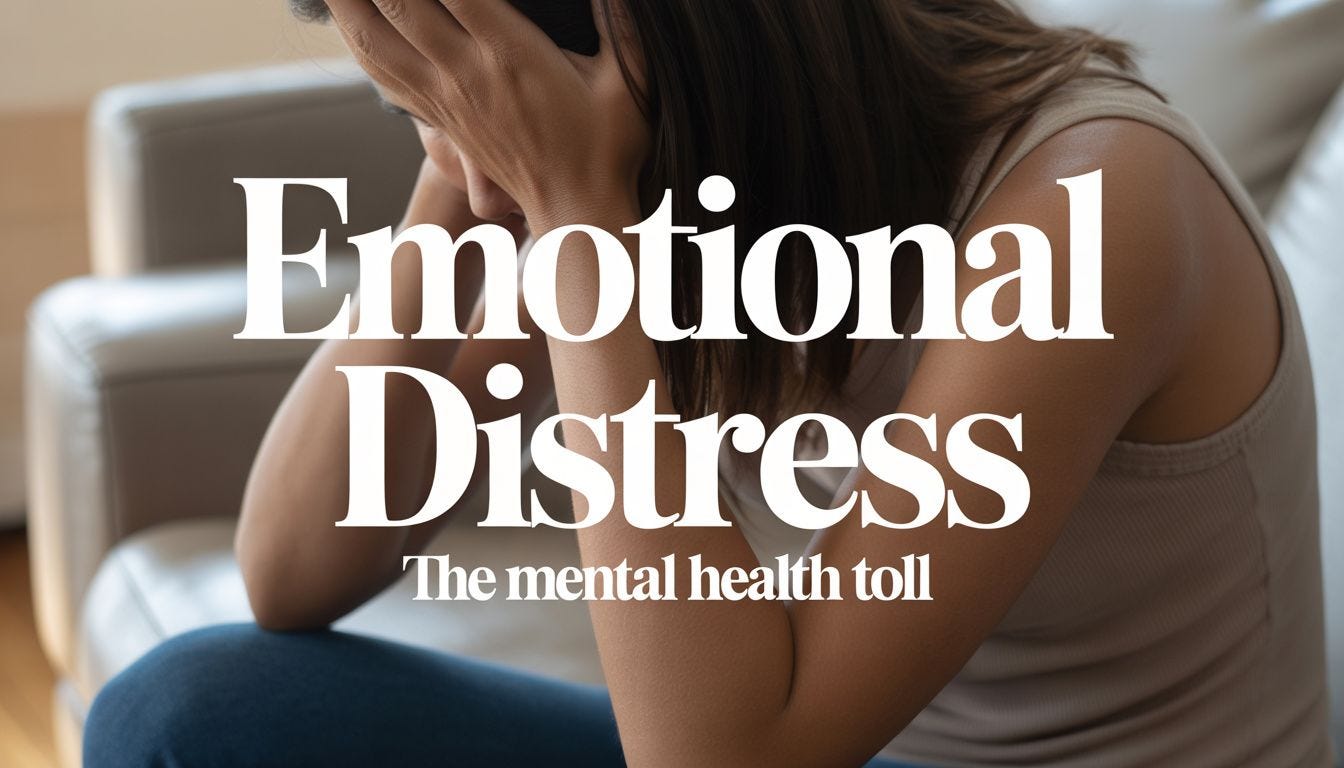
The anxiety kicks in around Thursday—Will he text me this weekend? The depression settles in by Sunday—What’s wrong with me?
If this is you, I want you to know something: You’re not broken. You’re human. And the way modern dating affects mental health is real, valid, and something we need to address head-on.
Here’s What I’ve Learned After 15 Years of Ministry
The intersection of faith and mental health isn’t talked about enough in Catholic dating circles. We get a lot of “just pray about it” and “God has a plan,” but what about when prayer feels impossible because you can barely get out of bed?
I remember a season in my late twenties, after my first marriage fell apart, when I had to step back from dating entirely. Not because I didn’t want love—I was desperate for it—but because I couldn’t handle another rejection, another disappointment, another night wondering if I’d ever be chosen.
My spiritual director at the time said something that changed everything: “Katie, taking care of your mental health isn’t a lack of faith. It’s an act of faith. God gave you a body and soul that work together—you can’t neglect one and expect the other to flourish.”
That wisdom saved me.
Let’s Talk About What’s Really Going On
The modern dating landscape is uniquely designed to mess with your mental health. Here’s why:
The Apps Turn People Into Products. Swipe left, swipe right, next, next, next. When you’re constantly being evaluated based on six photos and three sentences, your brain starts to internalize that treatment. You begin to see yourself as a commodity to be marketed rather than a person to be known.
Ghosting Rewires Your Attachment System. That person you thought you had a connection with? They vanished without explanation. Your nervous system doesn’t understand this. It just knows that someone you were bonding with disappeared, triggering all your deepest fears about being unlovable.
Choice Overload Creates Anxiety. Dating apps tell us there are infinite options, so we never feel settled. Even when we find someone good, there’s a nagging voice asking, “But what if someone better is out there?” The paradox of choice that psychologists talk about? It’s real, and it’s brutal in dating.
Rejection Accumulates. Each “no thanks” text, each fade-out, each relationship that doesn’t work adds to a growing pile of evidence that maybe you’re the problem. Maybe you’re too much, not enough, somehow fundamentally flawed.
I recently worked with a woman who had been dating for seven years. Smart, faithful, beautiful—but she kept choosing emotionally unavailable men, then blaming herself when they didn’t commit. By the time she came to me, she was convinced she was unworthy of love.
Another client, a good Catholic man in his thirties, developed social anxiety so severe he couldn’t go to parish events anymore. Too many well-meaning parishioners asking, “So, are you dating anyone?” Too many weddings where he was the only single person at the table.
This is the reality we’re dealing with. And if you’re struggling, you’re not weak—you’re responding normally to an abnormal situation.
Ground Truth: You Are an Embodied Soul
Here’s where Catholic teaching becomes life-saving wisdom: You are not just a soul that happens to have a body. You’re an embodied soul—a unity of body and spirit that God created as good.
In Theology of the Body, St. John Paul II reminds us that “the redemption of the body helps first of all to discover all this good in which man achieves the victory over sin and concupiscence.” This isn’t just about sexuality—it’s about understanding that your mental health, your emotional well-being, your brain chemistry all matter to God.
When dating culture tells you to ignore your body’s stress signals, to push through anxiety, to “think positive” when you’re clinically depressed, it’s asking you to fragment yourself. It’s asking you to live as if you were a disembodied soul.
But you’re not.
Your anxiety isn’t a spiritual failing—it’s information. Your depression isn’t a lack of faith—it’s your body-soul unity crying out for care. The way your nervous system responds to rejection, uncertainty, and disappointment isn’t weakness—it’s your embodied self trying to protect you.
God doesn’t want you to bypass your humanity to find love. He wants you to embrace it fully, wounds and all, and let Him heal you there.
The Toxic Positivity Problem in Catholic Dating
Can we be honest for a minute? The Catholic dating world has a toxic positivity problem.
“Just trust God’s timing.” “Pray more.” “Offer it up.” “Maybe God is calling you to singleness.”
These aren’t necessarily wrong, but when they’re used to dismiss real emotional pain, they become harmful. When someone is struggling with dating depression or anxiety, what they need isn’t more spiritual platitudes—they need practical help and pastoral care.
I’ve seen too many Catholics suffer in silence because they think seeking therapy or taking medication means their faith isn’t strong enough. That’s not Catholic teaching—that’s Protestant-influenced spirituality that sees the body as separate from the soul.
The Catholic understanding is integration. Your mental health is part of your total health as a person. Taking care of it isn’t selfish—it’s stewardship.
Practical Steps for Protecting Your Mental Health While Dating
Here’s what I’ve learned works, both from my own experience and from coaching hundreds of Catholic singles:
Set Boundaries With Dating Apps. I recommend the “Sunday through Tuesday” rule. Delete the apps Wednesday through Saturday. Give yourself a break from the constant evaluation and choice overload. Use those four days to invest in real-life relationships and activities that fill you up.
Practice the 48-Hour Rule. If someone doesn’t text back within 48 hours, assume they’re not interested and move on. Don’t spend a week analyzing their last message or creating stories about why they haven’t responded. Protect your mental energy.
Get Professional Help When You Need It. If you’ve been dating for more than six months and notice increased anxiety, depression, or negative self-talk, see a therapist. Preferably one who understands Catholic values but isn’t afraid of psychology. Faith and therapy aren’t competitors—they’re teammates.
Take Dating Sabbaths. Sometimes the most faithful thing you can do is stop dating for a season and focus on your own healing. I took a full year off dating in my late twenties. Best decision I ever made. I went to therapy, deepened my prayer life, and learned to be alone with God without desperation driving the relationship.
Find Your People. You need friends who understand both your faith and your struggle. Not people who will just tell you to “pray about it,” but people who will pray with you and then ask how you’re really doing.
When Depression Meets Dating: A Special Word
If you’re dealing with clinical depression, dating becomes exponentially harder. Everything feels like evidence that you’re unworthy of love. Rejection feels devastating. Even good dates can trigger anxiety about inevitable disappointment.
I want to speak directly to you: Your depression doesn’t disqualify you from love, but it does mean you need extra support and wisdom in how you date.
Consider telling close friends about your mental health so they can help you process dating experiences more objectively. Consider working with a therapist who can help you separate your depression thoughts from reality. And please, please be honest with potential partners about your mental health when the relationship gets serious.
I worked with one client who was afraid to tell anyone about her depression because she thought it made her “damaged goods.” When she finally opened up to a man she’d been dating for three months, his response was, “Thank you for trusting me with that. How can I support you?”
That’s the kind of person you want to marry—someone who sees your struggles as part of your story, not disqualifiers from love.
Remember: Healing Isn’t Linear
Some days you’ll feel strong and hopeful. Other days you’ll wonder if you should just adopt fifteen cats and call it a life. That’s normal.
Healing from dating trauma—because yes, that’s what this is—isn’t a straight line. You’ll have setbacks. You’ll fall back into old patterns. You’ll have days when the anxiety feels overwhelming again.
That’s not failure. That’s the human experience.
The difference is that now you have tools. You understand what’s happening. You know when to step back and when to push forward. You’re learning to date from a place of wholeness rather than woundedness.
And that changes everything.
The Integration You’re Looking For
Here’s what I want you to understand: Taking care of your mental health while dating isn’t about becoming perfect before you find love. It’s about becoming integrated.
It’s about learning to honor both your desires for relationship and your need for emotional safety. It’s about holding space for both your longing and your limits. It’s about dating as the full, complex, beautiful, broken person you actually are—not the person you think you need to be to deserve love.
As St. John Paul II taught us, your vocation is “inscribed in man according to all his psycho-physical makeup.” That includes your mental health. That includes your anxiety and depression. That includes the parts of you that dating culture says to hide.
God doesn’t love you despite your struggles with mental health—He loves you through them, in them, with them. And the person He has for you? They’re going to love you the same way.
Note: If this article brings up painful memories or you’re struggling with serious trauma, please reach out to a licensed counselor or your parish priest. You don’t have to process this alone. If you’re in crisis, call 988 (Suicide & Crisis Lifeline).
Your Homework This Week
Pick one boundary from the list above and implement it this week. Just one. Maybe it’s deleting the dating apps for four days. Maybe it’s scheduling that therapy appointment you’ve been putting off. Maybe it’s telling one trusted friend what you’re really going through.
Don’t try to fix everything at once. Just take one step toward caring for your whole self—body, mind, and spirit—the way God cares for you.
You’re not behind schedule. You’re not broken beyond repair. You’re not asking for too much when you want both love and emotional health.
You’re simply learning what it means to date as an embodied soul in a fallen world, trusting that the God who created you for love is also the God who walks with you through every disappointment, every anxiety attack, every moment when hope feels impossible.
Remember: You are created for love—not someday when you’re “better,” but right now, exactly as you are.
In Him,
Katie
Katie Palitto is a relationship & dating coach @Finding Adam Finding Eve ministry and co-creator of the Game of Love app.