

That “quick check” of your phone is stealing something you can’t get back.
Let me ask you something uncomfortable: How much time did you spend on your phone yesterday?
Not working. Not calling your mom. Just... scrolling. Checking. Refreshing. Watching stories. Swiping through profiles.
If you’re like most young adults, the answer is somewhere between two and four hours. Every. Single. Day.
That’s 14-28 hours a week. 60-120 hours a month. Up to 1,400 hours a year.
Spent doing what, exactly?
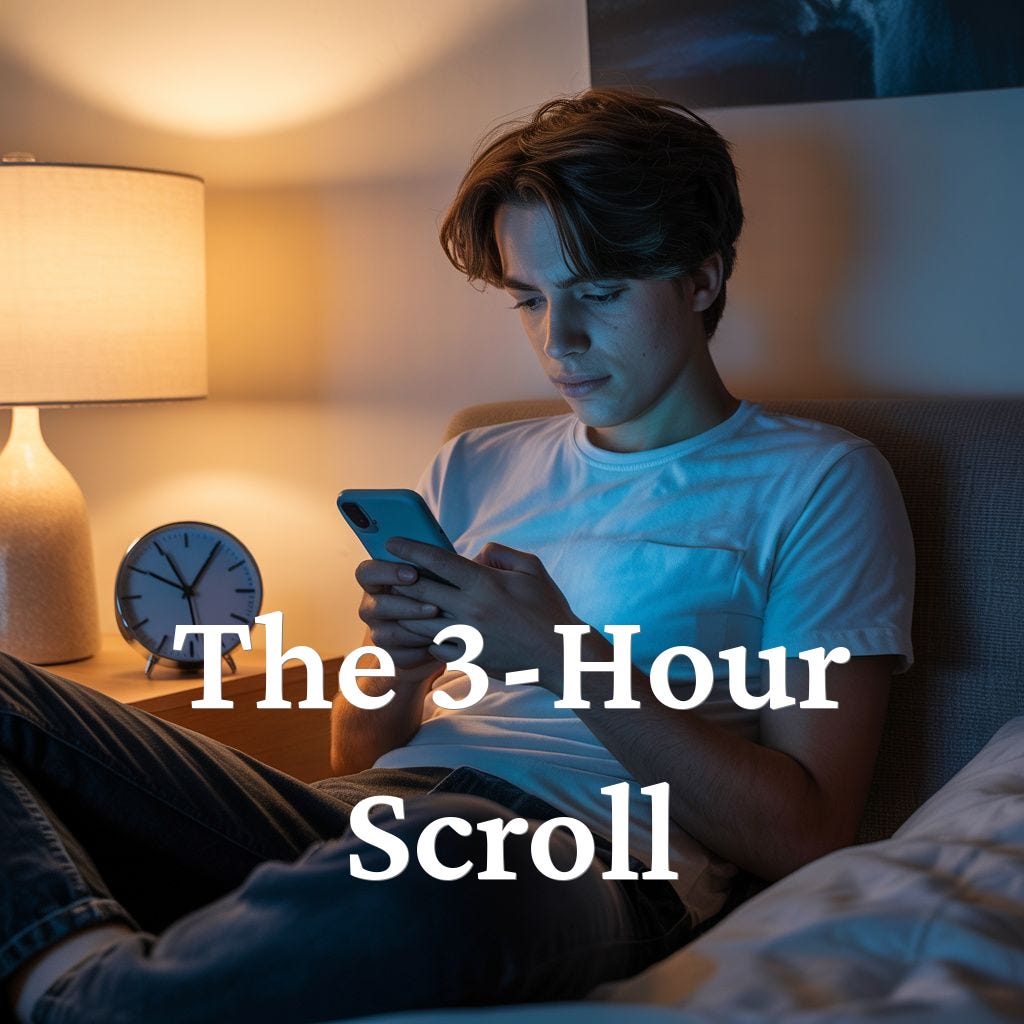
The Evening That Disappeared
I recently asked a client to track her phone usage for a week. She was convinced she only spent “maybe an hour” on her phone each evening.
The screen time report said 3.5 hours. Average.
She was shocked. “Where does it go?”
Here’s where it goes: You get home from work. You’re tired. You tell yourself you’ll just check Instagram for a few minutes while you decompress. Then you see a reel that’s kind of funny, so you watch a few more. Then you check your dating apps—no new matches, but you swipe for a bit anyway. Then back to Instagram. Then TikTok. Then you realize it’s 9:30 and you haven’t eaten dinner.
Sound familiar?
What You’re Not Doing
Here’s what those 3.5 hours could have been:
Dinner with a friend
A young adult group at your parish
A phone call with someone who’s actually in your life
Reading a book that might change how you think
Going for a walk and actually being present
Inviting someone from church to coffee
Every hour on the scroll is an hour not building real connection. And real connection is the only thing that actually cures loneliness.
The Catechism tells us we’re made for communion—with God and with each other (CCC 1878). But communion requires presence. And you can’t be present while you’re scrolling.
The Illusion of Rest
“But I need to decompress,” you say. “I’m exhausted after work.”
I hear you. I really do.
But here’s what the research shows: scrolling doesn’t actually rest you. It keeps your brain in a state of low-grade stimulation—not working hard, but not resting either. You end your scroll session feeling more drained than when you started.
Real rest looks different. A walk. A bath. Silence. Prayer. A conversation with someone who knows you.
Scrolling feels like rest because it asks nothing of you. But it gives you nothing in return.
The Scary Math
Let me put this in perspective:
If you spend 3 hours a day scrolling from age 22 to age 35, that’s approximately 14,235 hours.
That’s 593 full days. Almost two years of your life.
Two years you could have spent building friendships, falling in love, becoming the person you want to be. Two years fed to an algorithm that doesn’t know your name.
Is that the trade you want to make?
A Different Evening
What if tonight looked different?
What if you put your phone in a drawer at 6 PM and didn’t touch it until morning? What if you called a friend instead of texting? What if you showed up to that thing you’ve been “meaning to go to” for months?
I’m not saying delete all your apps (though you could). I’m saying: reclaim your evenings. They’re the raw material of your actual life.
One client told me after a week of phone-free evenings: “I forgot what it felt like to be bored. And then I forgot what boredom felt like, because I started doing things again.”
Your Homework
Tonight, try this: Phone in another room from 6 PM to 9 PM. Just three hours.
Notice what happens. Notice what you do with the time. Notice how you feel.
Then ask yourself: What would my life look like if I did this every day?
The scroll is stealing your evenings. But you can take them back.
In Him,
Katie Palitto is a Catholic relationship coach and the creator of Game of Love.