

Here’s the dating advice no one wants to hear:
Before you find love in 2026, you need to become someone worth finding.
I know. It’s not the sexy advice. It won’t go viral. It doesn’t promise that one weird trick that will change everything.
But it’s true.
And if you’re willing to do this work, 2026 might be the year everything changes—not because you found someone, but because you became someone.
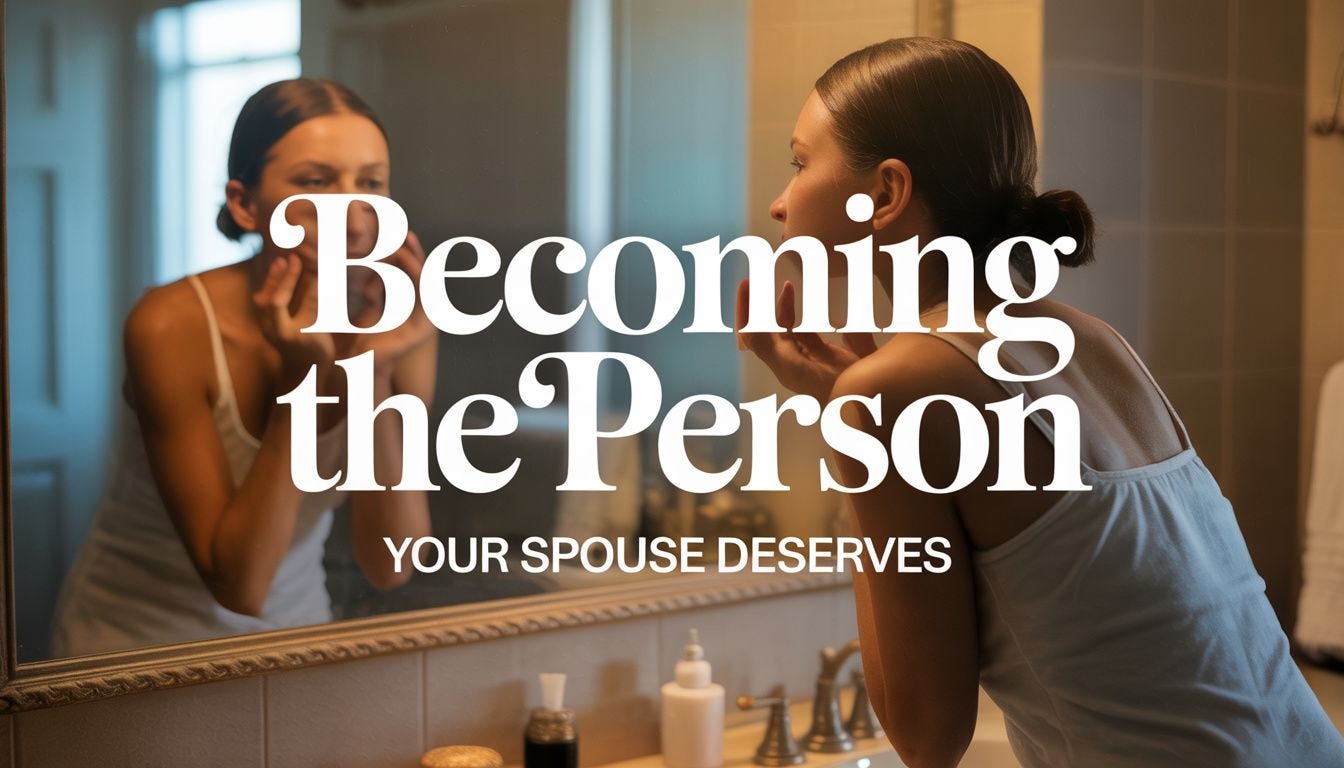
The Question You Should Be Asking
Most singles ask: “Where is my person?”
The better question: “Am I becoming the person my future spouse desires?”
I learned this the hard way. My first marriage failed because neither of us had done the work. We thought showing up was enough. We thought love would fill in the gaps.
It didn’t.
CCC 1615 says something profound about this: “By coming to restore the original order of creation disturbed by sin, [Christ] himself gives the strength and grace to live marriage in the new dimension of the Reign of God.”
That restoration work? It doesn’t wait until you’re married. It starts now.
What “Becoming” Actually Looks Like
Let me get specific. This isn’t about becoming a different person. It’s about becoming the fullest version of who God made you to be.
1. Heal Your Wounds
You don’t have to be perfectly healed to date. But you do need to be actively healing.
“Through the sacraments [the Church] flings wide open the channels of grace through which man is made a new creature,” teaches Humanae Vitae 25. Confession. Spiritual direction. Therapy when needed. These aren’t admissions of weakness—they’re channels of grace.
Ask yourself: What wounds am I carrying into every relationship? What patterns keep repeating?
2. Build Virtue, Not Just Skills
The Theology of the Body teaches that “at the center of the spirituality of marriage, therefore, there lies chastity not only as a moral virtue (formed by love), but likewise as a virtue connected with the gifts of the Holy Spirit.”
Chastity. Patience. Temperance. Humility. Generosity. These aren’t old-fashioned restrictions—they’re the muscles that make love sustainable.
Ask yourself: Which virtue do I need to build most urgently?
3. Know Yourself Deeply
You can’t give yourself to someone if you don’t know who you are.
This means understanding:
Your attachment style
Your communication patterns
Your conflict style
Your deal-breakers and desires
Your wounds and triggers
Ask yourself: Could I articulate who I am and what I need to a potential spouse?
4. Develop Emotional Maturity
Emotional maturity means you can:
Identify what you’re feeling
Communicate it without blaming
Hear hard feedback without defending
Repair after conflict
Hold space for someone else’s emotions
These skills make or break marriages. And they’re skills you can practice now.
Ask yourself: How do I handle conflict? Am I growing in this area?
5. Live a Life Worth Sharing
One of the best things you can do for your future marriage is build a full life now.
Not a busy life—a full one. Friendships. Service. Prayer. Work that matters. Hobbies that energize you.
When you have a full life, you don’t enter relationships desperate for someone to complete you. You enter as someone with something to offer.
Ask yourself: Would my current life be something I’d be excited to share?
The Gift of Self Requires Self-Possession
St. John Paul II’s phrase keeps coming back to me: before self-gift comes self-possession.
CCC 2395 says “chastity means the integration of sexuality within the person. It includes an apprenticeship in self-mastery.”
That word—integration—is key. Not repression. Not denial. Integration. Becoming whole.
A person who hasn’t done this work brings fragmentation into marriage. Their unhealed wounds become their spouse’s burden. Their unexamined patterns become the relationship’s patterns.
But a person who has done this work? They bring something beautiful: a whole self, ready to give.
What I Wish I’d Known Before My First Marriage
Mike and I both failed at marriage in our twenties. Here’s what we’ve learned since:
We wish we’d known our attachment styles. We both had wounds we hadn’t examined. Those wounds drove our behaviors, and we didn’t even know it.
We wish we’d built virtue more intentionally. We thought loving each other would be enough to sustain the marriage. It wasn’t. Virtue is what carries you through the hard days.
We wish we’d let community in. We dated in isolation. We didn’t let trusted people speak into our relationship. We missed warning signs that others would have seen.
We wish we’d understood marriage as vocation. We thought marriage would make us happy. We didn’t understand it was meant to make us holy.
These lessons came the hard way. They don’t have to for you.
The Practical Path to Becoming
Here’s your roadmap for the first quarter of 2025:
January: Assessment
Take the Game of Love relationship readiness assessment
Identify your attachment style
Name one wound that needs attention
February: Formation
Choose one virtue to focus on
Work with a coach, therapist, or spiritual director on your identified wound
Read one book on emotional intelligence or communication
March: Community
Join or commit to a Catholic young adult group
Let trusted friends into your dating life
Practice the skills you’re building in real relationships
This isn’t a sprint. It’s a formation journey. And it’s the best investment you can make in your future marriage.
You’re Not Behind
Can I tell you something?
If you’re reading this and feeling behind—like you should have figured this out by now—stop.
CCC 1641 tells us that married couples “help one another to attain holiness.” That help goes both ways. Your future spouse isn’t looking for a perfect person. They’re looking for a person who’s becoming.
Every day you spend in formation is a gift to your future marriage. Every wound you heal now is one you won’t bring to your spouse. Every virtue you build now is one you’ll share with your family.
You’re not behind. You’re preparing.
The Hope
Here’s what I believe with my whole heart:
When you do this work—when you become the person your future spouse deserves—God honors it.
Not always on your timeline. Not always how you expect. But He honors the faithfulness.
“The grace proper to the sacrament of Matrimony is intended to perfect the couple’s love and to strengthen their indissoluble unity,” says CCC 1641.
That perfecting doesn’t start at the altar. It starts in the formation you’re willing to do now.
Your Homework for This Week
Take the Game of Love assessment if you haven’t already
Write a letter to your future spouse about who you’re becoming for them
Choose one area from this article to focus on for January
Tell one trusted friend about your formation goals
You’ve got this. And God’s got you.
Praying for who you’re becoming,
In Him, Katie
Finding Adam Finding Eve
Related Posts in This Series
The Complete Guide to Dating Resolutions That Actually Work in 2026
Dating Sunday: How to Approach the Biggest Dating Day Differently
Take Action: Ready to go deeper than dating apps? Start your free assessment at → Game of Love
Katie is co-founder of Finding Adam Finding Eve ministry. Learn more at Gameof.Love.